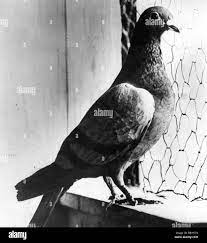
In 1932, the German army trained pigeons for aerial photography, with capabilities of 200 exposures per
flight. Simultaneously, the French developed film cameras for pigeons, releasing them behind enemy lines
using trained dogs. Despite the extensive use of war pigeons and dovecotes during World War II, their
specific role in aerial photography remains unclear. In 1942, the Soviet army discovered German trucks
with pigeon cameras, while the American Signal Corps considered adopting the technique in 1943. German
nurseries introduced pigeon photography toys during the war, featuring soldiers releasing pigeons with
oversized cameras.
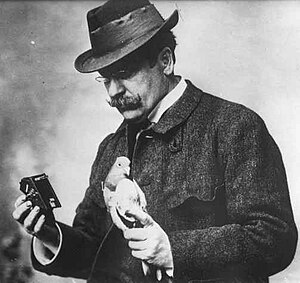
Swiss clockmaker Christian Adrian Michel played a crucial role in pigeon camera development in the
1930s. Assigned to the Swiss Army's carrier pigeons service, he adapted Neubronner's panoramic camera to
16 mm film, resulting in a patented lightweight camera in 1937. Despite unsuccessful attempts to sell to
the Swiss Army, around 100 cameras were constructed. Michel later patented a shell and harness for
pigeon transport during World War II. The Musée suisse de l'appareil photographique holds approximately
1,000 test photos from the development of Michel's camera, showcasing the innovative use of pigeons in
wartime photography.